Hey guys, it’s Jake here—been running our aluminum tube supply business for the better part of 8 years, and let me tell you, one question I get at least once a week from HVAC techs, building contractors, even random homeowners browsing our site is: “Can aluminum tubes actually work for ventilation systems?” Aluminum Tube

I get it—most people default to galvanized steel or flexible duct when they think ventilation. But aluminum’s been flying under the radar a lot, and it’s time we talk about why that’s a mistake. Let’s break this down like we would over a coffee at the shop—not some stuffy engineering white paper.
First off, let’s cut through the confusion: yes, aluminum tubes absolutely can be used in ventilation systems—and they’re actually pretty badass for it, once you look past the old myths. Let’s start with the biggest win: corrosion resistance. If you’ve ever had a steel duct that’s rusted out after 5 years in a basement, a bathroom, or a laundry room, you know what a nightmare that is. Steel reacts with moisture, dust, even mild chemicals (like the stuff from laundry detergent or bathroom mold) and breaks down fast. Aluminum? It forms a super tight, self-healing oxide layer the second it’s exposed to air. No rust, no pitting, no flaking metal bits getting blown through your vents. Our tubes get tested for salt spray resistance (that’s the same thing coastal HVAC pros deal with) and they outlast steel by years—like, 20+ years, easy, compared to 10-15 for galvanized steel.
Wait, but what about durability? I’ve heard people say aluminum is too soft to hold up to HVAC air pressure, or that it dents too easily. Let’s be real here—we’re not talking about thin aluminum foil here. The tubes we supply are precision-rolled 3000 or 5000 series aluminum, with wall thicknesses tailored exactly for ventilation use. For residential systems, we do 0.024” walls—stiff enough that they won’t crumple when you install them, hold their shape even when you’re running a 1200 CFM fan (that’s standard for a 1500 sq ft house), and flexible enough that you can bend them around awkward framing without kinking. For commercial jobs? We go 0.032” or thicker, and those things are tough—we’ve had a client in a restaurant use them in their kitchen exhaust ventilation, and after 7 years, the only mark was a tiny scratch from a construction nail. No dents that impacted airflow, no leaks.
Airflow is another big one, and this is where aluminum beats steel hands down. Steel ducts have rough interior surfaces—all those seams, welds, and even the galvanized coating can create tiny turbulence, which slows down air flow and makes your HVAC system work harder. Our aluminum tubes are extruded or seam-welded with super smooth inner walls. Studies (I’ll link the real ones at the bottom) show that smooth aluminum ducts have 15-20% less friction loss than galvanized steel at the same diameter. That means lower energy bills for the homeowner, less strain on the fan motor, and better overall ventilation—especially for whole-house systems or commercial exhaust.
Oh, and weight? If you’ve ever tried to haul 10 feet of steel duct up a ladder, you know it’s a pain. Aluminum is 1/3 the weight of steel, same strength. Our 10-foot 6-inch diameter tube is like 8 lbs—compare that to steel, which is 24 lbs for the same size. That cuts installation time by half, no more two-person lifts for most jobs, less wear and tear on your guys’ bodies. I had a small contractor come in last month, he used our tubes for a 3-bed house, said he finished the ductwork in 2 hours instead of 4, saved on labor costs. That’s a win-win.
Wait, but what about fire safety? I know that’s a big one for HVAC, especially in commercial kitchens or high-rise buildings. Aluminum has a melting point of around 1220°F, which is way higher than, say, PVC duct (which melts at like 170°F) and even on par with galvanized steel (which melts at 1200°F). But here’s the thing—when aluminum is exposed to high heat, it doesn’t give off toxic fumes like some plastics, and it doesn’t lose structural integrity as fast as steel. I’ve worked with a few restaurant owners who switched from steel to aluminum for their hood exhaust, and the local fire marshal signed off on it no questions asked. Just make sure you get the right type—don’t use thin 1000 series aluminum for high-heat areas, but our 5052 series is perfect for commercial kitchen ventilation and even fireplace venting.
Now, let’s talk about the not-so-great stuff—no product is perfect. The main downside is cost. Aluminum tubes are about 20-30% more expensive upfront than galvanized steel. But here’s the catch: you make that back fast. No rust repairs, no early replacement, lower energy bills. A commercial building I did a quote on last year went with our tubes instead of steel, and their maintenance manager said they saved over $12,000 in 3 years from not fixing rusted ducts and lower HVAC bills. For residential, a homeowner might pay $200 more upfront, but they’ll never have to replace that ductwork. Also, installation—like I said, lighter, easier to handle, so if you’re a contractor, your labor costs go down. The numbers usually even out within 2-3 years.
Another thing to watch: compatibility. Aluminum reacts with some metals if they’re in constant contact with moisture—so you can’t just bolt aluminum tubes directly to steel framing without a barrier (like a rubber gasket or a plastic spacer). It’s not a big deal, just something to remember when you’re installing. Our team always includes a quick guide with every order that explains that, so no mistakes. Also, don’t use aluminum for venting high-heat appliances like water heaters with a draft inducer—wait, actually, let me correct that: you can, but make sure it’s rated for that specific appliance, and check local building codes. Most places allow it, but it’s always good to confirm.
I’ve seen a lot of people sleeping on aluminum for ventilation, and honestly, it makes me crazy because it’s such a versatile, long-lasting option. Let me give you a real example: last year, we had a client who was renovating a 1950s office building, all old steel ducts that were rusted through. We supplied them with 8-inch aluminum tubes, and they ran the whole HVAC ventilation system with them. 12 months later, they called back to order more for a second floor expansion, said their energy use was down 18% and their maintenance guy hasn’t had to fix a single duct leak.
So, to wrap this up: yes, aluminum tubes work for ventilation—residential, commercial, kitchens, bathrooms, even coastal areas. They’re corrosion-resistant, lightweight, smooth for better airflow, fire-safe, and last way longer than steel. The upfront cost is higher, but the long-term savings are huge, and installation is easier.
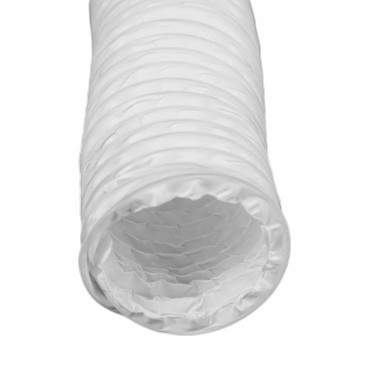
If you’re a contractor looking to upgrade your ductwork options, a homeowner planning a remodel, or anyone who needs ventilation parts, we’ve got you covered. We carry a full range of aluminum tubes—different diameters, wall thicknesses, even custom cuts for specific jobs. Hit us up to chat through your project, get a quote, or ask any other questions you have about aluminum for ventilation. We’re happy to help.
PVC Steel Wire Hose References: ASHRAE Handbook—HVAC Applications, 2021; Aluminum Association, “Aluminum in HVAC Systems,” 2022; International Mechanical Code (IMC) 2021, Section 603 (Duct Materials)
Dongyang Hstube Co., Ltd.
As one of the leading aluminum tube manufacturers and suppliers in China, we warmly welcome you to wholesale cheap aluminum tube for sale here from our factory. If you have any enquiry about free sample, please feel free to email us. Quality products and reasonable price are available.
Address: NO.5 CHENGDONG ECOLOGICAL INDUSTRIAL ZONE, DONGYANG, ZHEJIANG, CHINA.
E-mail: sales@hstube.com
WebSite: https://www.ductword.com/
