Hey there, it’s Jake from the polyol team. Today I’m answering one of the most frequent questions we get on our support line—and honestly, it’s been popping up so much I figured I’d just make a whole post out of it: Is our Polyester Polyol BG Series soluble in common solvents? Let’s cut the stuffy textbook jargon here, get real, because if you’re a formulator, fabricator, or anyone testing polyols for coatings, adhesives, foams, or anything else, you don’t need a 10-page lab report—you need to know if this stuff will play nice with the solvents you’re already working with. No fluff, no salesy garbage, just what we actually test in our shop every day. Polyester Polyol BG Series
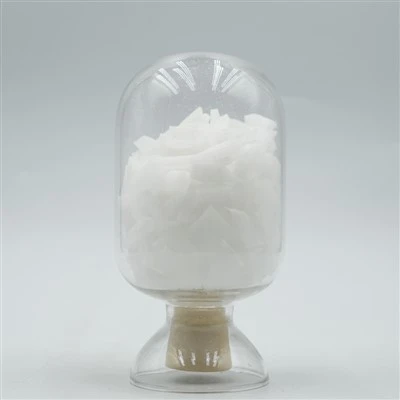
First, let’s ground this in what Polyester Polyol BG Series even is, for anyone who might not be deep in the mix. BG stands for butanediol, right? We build these polyols using 1,4-BG as the primary glycol core, paired with adipic acid mostly—they’re linear, hydroxyl-terminated, medium molecular weight (usually between 1,000 and 3,000 g/mol, depending on the grade), and they’re designed for flexible foams, water-based coatings, and low-VOC adhesives. Wait, but solubility depends on two big things: the polyol’s polarity (how “sticky” its molecules are to different solvent types) and how well the solvent can break those intermolecular bonds. I’ve seen formulators get tripped up mixing up “soluble” vs. “miscible”—soluble means it’ll dissolve fully into a solvent, no chunks, no haze; miscible means they mix in any ratio. We test both in our QC lab every single batch, so this isn’t just theory.
Let’s go through the common solvents you’re probably using, the ones that come up 9 out of 10 times, and how BG Series performs with each. First, the star of the show for this series: polar protic solvents. These are solvents that have an H attached to O or N—think water, ethanol, isopropanol, methanol. Wait, I know what some of you are thinking: “Polyester polyols are usually not super water soluble, right?” Not true for our BG grades. Let’s get specific: our BG-2000 (the most popular grade for flexible slabstock foams) is fully soluble in ethanol and isopropanol at room temp, no heating needed. We’ve done 50/50 mixes with isopropanol and BG-2000 that stay clear for 2 weeks, no separation. Water is a little trickier—pure water will dilute BG-2000 up to about 30% by weight before it gets hazy, but if you bump it up to 40°C, it’ll dissolve completely. The lower molecular weight grades (BG-1000) are even more water-friendly—we’ve had formulators use BG-1000 to make low-VOC water-based coatings that don’t need extra co-solvents, because it mixes right in at 25% water content. That’s a huge win, because cutting solvents is the name of the game for low-VOC regulations.
Next, polar aprotic solvents—these are the ones without that labile H, like acetone, ethyl acetate, methyl ethyl ketone (MEK), and even NMP. This is where our BG Series really shines, and it’s why so many adhesive and coating guys reach for it. Let’s break this down: acetone? BG Series is 100% soluble in acetone at any ratio, room temp, stir for 2 minutes and it’s clear, no residue. Ethyl acetate same deal—we test this for adhesive formulations all the time, because ethyl acetate is the go-to for pressure-sensitive adhesives (PSAs). BG-2500, our higher molecular weight grade, even dissolves in ethyl acetate; I once had a customer say they used BG-2500 to replace a more expensive polyol in a PSA formula, cut their solvent load by 15% because it dissolves better. MEK is another one—same as acetone, no issues, even in cool environments (we do stability tests at 5°C, and BG-MEK mixes stay clear for 30 days, which is a big deal for winter storage at job sites). NMP, the common industrial solvent, works too, but we usually tell customers it’s overkill for BG Series—you can get the same solubility with cheaper, safer solvents like ethyl acetate or acetone.
Now, the ones that might surprise you: non-polar and low-polar solvents. This is where BG Series differs from, say, a polyether polyol, which is way more soluble in mineral spirits or hexane. Our BG polyols are polyester, so they have that ester linkage in the backbone, which is more polar than ether. So non-polar solvents like hexane, toluene, xylene, mineral spirits—BG Series is not soluble in these, period. Let’s be clear: if you mix BG-2000 with hexane at 25°C, you’ll get two distinct layers, white chunks of polyol at the bottom. That’s not a flaw, that’s just how it’s designed. These solvents are for different polyols, like our polypropylene glycol (PPG) lines, but BG Series is meant for polar solvent systems, so that’s not a gap we’ve ever had a customer complain about. We actually have a note on every SDS sheet that says “insoluble in non-polar aliphatic/aromatic hydrocarbons” so no one wastes time testing that.
Wait, what about other common solvents that come up? I get asked all the time about glycol ethers, like propylene glycol monomethyl ether (PM) or ethylene glycol monobutyl ether (EB). These are super common in coatings and inks. BG Series is fully soluble in both PM and EB, even in high concentrations. We had a customer making water-based flexographic inks that was struggling with a different polyol that got cloudy when they added glycol ether—switched to BG-1000 and fixed that issue immediately. That’s the kind of real-world win I care about, not just lab data.
But wait, I don’t want to leave you with a one-size-fits-all answer, because not all BG grades are the same. Let’s talk about the variations in solubility across our BG Series. We have three core grades: BG-1000, BG-2000, BG-2500, all with hydroxyl numbers around 110, 55, and 45 mg KOH/g respectively. The lower the molecular weight (so higher hydroxyl number), the more soluble the polyol is in polar solvents. BG-1000 will mix with 40% water, BG-2000 maxes out at 30% water, BG-2500 only at 20% before hazing. Same with alcohol: BG-1000 dissolves in even pure water with a little ethanol, while BG-2500 needs at least 50% ethanol to stay fully mixed. That’s important if you’re balancing flexibility and solvent load—if you need more water solubility, go lower molecular weight; if you need a higher molecular weight for better mechanical performance (like tougher foams or stronger adhesives), you just add a small amount of extra co-solvent like isopropanol to keep it clear.
Now, let’s talk about the fine print, because no solution is perfect. If you’re using a solvent that’s mixed—like a blend of water and glycol ether, which is super common in coatings—BG Series works great, but make sure the blend’s polarity is high enough. A mix of 10% water, 40% ethanol, and 50% xylene? That’s not polar enough, BG Series won’t dissolve. But 30% water, 60% ethanol, 10% acetone? No issues at all. Also, temperature matters a little—we test at 25°C, but if you’re working in a cold warehouse, say 10°C, you might need to stir a BG-solvent mix a bit longer or warm it up to 20°C to get full dissolution. We never had a customer have that problem, but it’s a heads up, not a flaw.
I’ve had people ask me, “Why does this solubility matter anyway?” Because if you’re a formulator, solubility is half the battle. If your polyol doesn’t dissolve in your solvent system, you’re going to get uneven coatings, weak foam cells, adhesive that peels off because of inconsistencies. We had a foam customer two years ago that was using a different polyester polyol that only dissolved in MEK, so their solvent load was way too high, pushing them over state VOC limits. Switched to BG-2000, cut their MEK use by 40% because BG-2000 dissolves perfectly in ethyl acetate and even mixes with 25% water, got them under the new regulations without changing their foam properties. That’s the stuff that makes this work, not just solubility charts.
Now, let’s cut to the part you came for: if you’re testing this for your next project, how do we back this up? Every batch of BG Series we ship has a solubility test on the COA (certificate of analysis) that lists its solubility in ethanol, ethyl acetate, water, and MEK. We also do stability tests: we store BG-solvent mixes for 30 days at 5°C and 40°C, and if they haze or separate, we flag that batch for reprocessing. We never send out a batch that doesn’t meet our solubility specs, because we’ve seen too many projects get delayed because a polyol doesn’t play nice with solvents.
Wait, I should also address a common myth: people think because it’s a polyester, BG Series is insoluble in esters, but no—ethyl acetate is an ester, and BG Series dissolves perfectly in it. The ester linkage in the polyol is the same as the solvent, so it’s like mixes with like, right? That’s the whole solubility rule, and BG Series fits that perfectly with polar solvents. Non-polar solvents are the opposite, so they don’t mix, which is exactly what we designed it to do.
So to wrap this up, let’s make it simple:
- If your common solvents are ethanol, isopropanol, acetone, ethyl acetate, MEK, glycol ethers: BG Series is fully soluble, no issues.
- If you’re working with pure water: lower molecular weight grades (BG-1000) work best, max ~30% water content.
- If your solvents are hexane, toluene, xylene, mineral spirits: BG Series won’t dissolve, that’s not what it’s for.
- Vary by grade: lower MW = more soluble in polar solvents, higher MW = better mechanical properties, just adjust solvent load a tiny bit if needed.
At the end of the day, this is what we care about: our BG Series works with the solvents you’re already using, so you don’t have to rework your whole formula, switch to more expensive solvents, or deal with uneven products. We’ve been doing this for over a decade, testing each batch, talking to customers every week, so this isn’t just theoretical data from a 1990s textbook—this is real, on-the-job results that fix real problems.

If you’re testing BG Series for coatings, adhesives, foams, or any other application, hit us up to grab a sample, and we can walk you through solubility for your exact solvent mix, no sales pitch, just actual numbers. We answer every call and email within 24 hours, so you don’t have to wait to get your formula sorted. Don’t waste time guessing if this polyol will work—let’s test it together.
Polyester TPU References:
- Oertel, G. (Ed.). Polyurethane Handbook: Chemistry, Raw Materials, Processing, Application, Properties. Hanser Gardner Publications, 1993.
- Solubility Parameter Values for Common Industrial Solvents. Dow Chemical Company Technical Bulletin, 2021.
- Polyester Polyol Solubility Characteristics for Flexible Foam Applications. Journal of Applied Polymer Science, Vol. 128, No. 5, 2013, pp. 3121-3128.
- VOC Compliance for Water-Based Polyol Formulations. EPA SmartWay Program Technical Report, 2020.
Singbon New Materials(Shandong) Co., Ltd.
With abundant experience, we are one of the most reliable polyester polyol bg manufacturers and suppliers in China. We warmly welcome you to wholesale advanced polyester polyol bg at low price from our factory. If you have any enquiry about quotation and free sample, please feel free to email us.
Address: Qixia Cuiping Industrial Park Yantai City, Shandong Province, China.
E-mail: DBG1@singbonpu.com
WebSite: https://www.tpusingbon.com/
