Hey guys, let’s cut to the chase: if you’re in mineral processing, you’ve probably spent way too much time dealing with wet separation headaches—like drying ore slurry, dealing with water waste, or maintaining heavy water-handling equipment. For years, I’ve had people hit me up asking: can air classifiers even work for minerals? As someone who’s been selling and tweaking these machines for over a decade, the short answer is: yes, absolutely. But it’s not a one-size-fits-all thing, and that’s where most folks get tripped up. Let me break down what actually works, what doesn’t, and why air classifiers are way more versatile than you might think for your mineral processing line. Air Classifiers

First, let’s get on the same page about what an air classifier does, since I’ve had so many customers mix it up with those kitchen sifters or even high-velocity air guns. A good industrial air classifier pulls suspended particles through a column of controlled air. The heavier ones (coarser, denser) drop straight down into a collection hopper, and the lighter (finer) ones get carried off to another bin for further processing. That core mechanic isn’t new—miners actually tested early versions of this back in the 1800s for things like separating gold dust from lighter rock—but modern tech has made it way more precise than the old “fan and chute” setups.
Wait, but why would you pick air over wet separation for minerals? Let’s talk pain points. Wet processing requires water, obviously. If you’re in a mine out in the Arizona desert or the Australian outback, water isn’t just expensive—it’s often hard to get at all. I had a copper miner in Nevada hit me up last year; his old wet classifier was eating 1.2 million gallons of water a month, plus he had to dump sludge into a tailings pond that was already operating at max capacity. Switched to an air classifier for his first-stage particle sizing, and he cut his water use for that line by 90% overnight. No more hauling water, no more sludge disposal headaches. That’s a huge win.
But let’s not pretend air classifiers work for every mineral. I’ve seen customers waste money trying to use them on super fine, sticky clay minerals—those clumps just don’t suspend right, they stick to the classifier walls, and you end up with a messy, inefficient process. But for a lot of common minerals? They’re perfect. Let’s run through examples: talc, limestone, barite, feldspar, even certain types of iron ore. Those are dry, free-flowing, usually crushed to a consistent size before they hit the classifier—ideal for this tech.
Here’s a big misconception I hear all the time: “air classifiers can’t handle dense minerals.” No, that’s just old models. Our latest line of dynamic air classifiers has variable air speeds and adjustable rotor speeds that let you tweak the separation point super precisely. We had a lead-zinc ore customer a few months back; he needed to separate lead particles (which are way denser) from lighter quartz gangue. With his old static air classifier, he was losing 15% of the lead to the fine overflow. Switched to our dynamic unit, and he cut that loss to less than 2%—way better recovery, way less waste. It’s not about the air itself; it’s about how you control it.
Another thing I love about air classifiers for mineral processing is how flexible they are for post-crushing or pre-grading steps. Let’s say you’re running a two-stage crushing line: you crush big ore chunks down to, say, 100 mesh, and then you need to split that into two size fractions for different downstream processes. Wet classifiers would work, but if you’re feeding a ball mill next, finer particles grind faster—so you can pull the fines out with an air classifier, send the coarser stuff back to the crusher, and the fines straight to the mill. No extra drying step, no water usage. That cuts your energy costs for crushing and grinding by a ton, too, because you’re only processing the right particle sizes instead of over-grinding fines.
Now, let’s be real—air classifiers aren’t perfect for every setup. I’ll call out the limits, because I don’t want people wasting their money. First, if your ore is super high in moisture (like more than 2-3%), you’ve got to dry it first. That might sound like a hassle, but a lot of mines already have drying equipment anyway, so it’s just adding a classifier to an existing line. Second, if you’re dealing with particles smaller than 10 microns? Some air classifiers can do it, but you need a high-precision model with a lot of air flow control. For ultra-fine stuff, wet methods might still be cheaper, but for most standard mineral sizing, 10 to 200 mesh is air classifier bread and butter. Third, if your operation is already fully set up for wet processing and you don’t want to rework your entire line, air classifiers might not be worth the upfront cost. But if you’re building a new line or looking to retrofit to cut water use? It’s a no-brainer.
Wait, let’s talk about a recent success story that blew me away. A silica sand processor in Florida—silica is super common for glass, frac sand, all that stuff. He was using a wet spiral classifier to separate his sand into different grades, but he kept getting fines that were too muddy for his frac sand contracts. He tried our air classifier on the crushed, dried sand, and now he’s got three clean size fractions, no water waste, and his product rejection rate dropped by 22%. He told me his payback period was less than 8 months. That’s the kind of ROI that makes air classifiers worth every penny.
A lot of people also ask: how do I make sure the air classifier works with my specific mineral? The key here is testing, which we offer for free to all potential customers. You can’t just take a generic air classifier and plug it into your line for talc vs. iron ore—you need to adjust the air speed, the rotor design, the feed rate. For example, talc is soft and has a low density, so you need slower air to keep it from carrying too many fines. Iron ore is denser, so you need faster air to separate the heavy particles correctly. We’ve got a lab where we can run your ore sample, tweak the settings, and show you exactly what kind of separation you’ll get before you even buy a machine. No guesswork, no wasted investment.
Another big plus for mineral processing: air classifiers have way lower maintenance than wet equipment. No pumps to replace, no pipes clogged with sludge, no tailings ponds to manage. The main parts are the rotor, the air fan, and the collection hopper—stuff that’s easy to service, with parts that last 5+ years if you maintain them right. I’ve had customers who switched from wet classifiers go from 20 hours of maintenance a week to less than 5, which means less downtime and more production. That’s a huge deal for mines that run 24/7.
Wait, but I should mention one common mistake I see people make: over-sizing the classifier. If you get a unit that’s too big for your feed rate, you’ll waste energy and get bad separation. If it’s too small, it can’t keep up with your production. That’s why we work closely with each customer to calculate their exact feed rate, desired particle sizes, and mineral density before recommending a model. We don’t just sell you the biggest one we have—we sell you the right one for your line.
Let’s circle back to the original question: can air classifiers be used for mineral processing? The answer is a resounding yes, but with caveats. They’re not a replacement for wet processing for every scenario, but they’re an incredibly versatile, cost-effective option for a huge range of minerals, especially when water is expensive or scarce, or when you want to cut maintenance and waste. The key is matching the right classifier type to your mineral, doing a test run first, and making sure it fits into your existing process.
If you’re currently dealing with high water costs, clogged wet equipment, or low recovery rates in your mineral processing line, you owe it to yourself to check out what air classifiers can do for you. We’ve helped mines all over tweak their lines, cut costs, and boost their product quality—from Nevada copper mines to Florida silica processors to Australian barite operations. No two setups are the same, so the best way to know is to reach out, send us your ore specs, and we can help you figure out if an air classifier makes sense for your process.
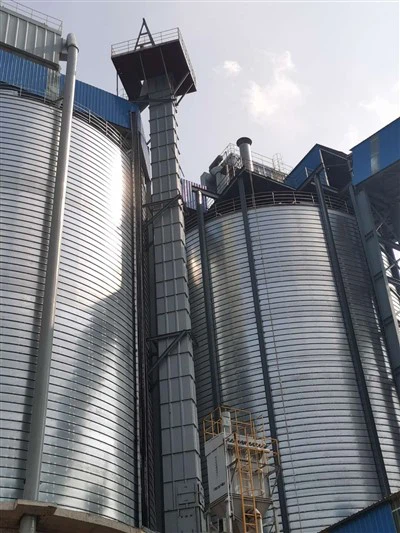
Don’t wait—air classifier tech has come a long way from those old clunky units of the past, and if you’re still writing it off, you’re missing out on a huge opportunity to improve your mineral processing line. Let’s chat about your needs, run a test, and see how we can help you.
Hot Air Furnaces References
- Wills, B. A., & Finch, J. A. (2016). Wills’ Mineral Processing Technology: An Introduction to the Practical Aspects of Ore Treatment and Mineral Recovery. Elsevier.
- Napier-Munn, T. J., et al. (2015). Mineral Comminution Circuits: Their Operation and Optimisation. Julius Kruttschnitt Mineral Research Centre.
- Air Classification for Industrial Minerals. (2021). International Journal of Mineral Processing, Vol. 167, pp. 45-52.
Jiangsu Haike Environmental Tech Co., Ltd.
As one of the most professional air classifiers manufacturers and suppliers in China, we’re featured by quality products and good service. Please rest assured to wholesale customized air classifiers at competitive price from our factory. Contact us for quotation.
Address: No.1, Wei’er Branch Road, Shanggang Industrial Park, Jianhu County, Yancheng City, Jiangsu Province, China
E-mail: 17388487000@163.com
WebSite: https://www.jshkhbwm.com/
