When it comes to ball bearing disc springs, safety is of paramount importance. As a supplier of ball bearing disc springs, I understand the critical role these components play in various industries, from automotive to aerospace, and the potential risks associated with their use. In this blog post, I will discuss the key safety considerations that users should keep in mind when working with ball bearing disc springs. Ball Bearing Disc Spring

1. Material and Quality Assurance
The first and foremost safety consideration is the quality of the ball bearing disc springs. The material used in manufacturing these springs significantly impacts their performance and safety. High – quality materials such as alloy steels are commonly used due to their excellent strength, fatigue resistance, and corrosion resistance.
As a supplier, we ensure that all our ball bearing disc springs are made from the highest – grade materials. We conduct rigorous quality control checks at every stage of the manufacturing process. This includes material testing to verify its chemical composition and mechanical properties. For example, we use techniques like hardness testing to ensure that the spring material has the appropriate hardness to withstand the intended loads.
Any deviation in material quality can lead to premature failure of the spring. A spring made from sub – standard material may not be able to handle the specified loads, which can result in sudden breakage. This can be extremely dangerous, especially in applications where the spring is a critical component, such as in heavy machinery or safety – critical systems.
2. Load Capacity and Design
Understanding the load capacity of ball bearing disc springs is crucial for safety. Each spring is designed to handle a specific range of loads. Exceeding this load capacity can cause the spring to deform permanently or even break.
When designing a system that uses ball bearing disc springs, engineers must accurately calculate the loads that the springs will be subjected to. This includes both static and dynamic loads. Static loads are constant forces applied to the spring, while dynamic loads can vary over time, such as those caused by vibrations or impacts.
As a supplier, we provide detailed load – deflection curves for our ball bearing disc springs. These curves help engineers select the appropriate spring for their application. For example, if a system requires a spring to support a heavy static load, the engineer can refer to the load – deflection curve to choose a spring with the right stiffness and load – carrying capacity.
In addition to load capacity, the design of the spring also affects safety. The shape and dimensions of the spring, as well as the number of springs used in a stack, must be carefully considered. A poorly designed spring stack may not distribute the load evenly, leading to uneven wear and potential failure.
3. Installation and Assembly
Proper installation and assembly of ball bearing disc springs are essential for their safe operation. Incorrect installation can cause the spring to be misaligned or over – compressed, which can lead to premature failure.
Before installation, it is important to clean the mating surfaces to ensure that there are no contaminants that could affect the spring’s performance. The springs should be installed in the correct orientation, following the manufacturer’s instructions. For example, some ball bearing disc springs have a specific direction in which they should be stacked to ensure proper load distribution.
During assembly, it is crucial to use the correct tools and techniques. Over – tightening or under – tightening the fasteners that hold the springs in place can cause problems. Over – tightening can lead to excessive stress on the spring, while under – tightening can cause the spring to move or come loose during operation.
As a supplier, we provide installation guides and support to our customers. We can also offer training on proper installation techniques to ensure that our ball bearing disc springs are installed safely and correctly.
4. Environmental Factors
The environment in which the ball bearing disc springs operate can have a significant impact on their safety. Factors such as temperature, humidity, and exposure to chemicals can affect the performance and lifespan of the springs.
High temperatures can cause the spring material to lose its strength and elasticity. This can lead to increased wear and a higher risk of failure. On the other hand, low temperatures can make the spring material brittle, increasing the likelihood of cracking.
Humidity and exposure to chemicals can cause corrosion of the spring. Corrosion weakens the spring over time, reducing its load – carrying capacity and potentially leading to sudden failure.
To mitigate these risks, it is important to select the appropriate spring material and coating for the specific environment. For example, in a high – humidity or corrosive environment, a spring with a corrosion – resistant coating may be required. As a supplier, we can provide advice on the best spring materials and coatings for different environmental conditions.
5. Maintenance and Inspection
Regular maintenance and inspection of ball bearing disc springs are necessary to ensure their continued safe operation. Over time, springs can experience wear, fatigue, and corrosion, which can affect their performance.
Maintenance activities may include cleaning the springs to remove dirt and debris, lubricating moving parts (if applicable), and checking for signs of damage or wear. Inspection should be carried out at regular intervals, and any damaged or worn springs should be replaced immediately.
As a supplier, we can provide maintenance guidelines and inspection checklists to our customers. We also offer replacement parts and support to ensure that our customers can keep their ball bearing disc springs in good working condition.
6. Training and Education
Proper training and education of the personnel who work with ball bearing disc springs are essential for safety. Operators and maintenance staff should be trained on the correct use, installation, and maintenance of these springs.
Training programs can cover topics such as spring selection, installation techniques, safety procedures, and inspection methods. By providing comprehensive training, we can help our customers reduce the risk of accidents and ensure the safe operation of their equipment.
7. Compliance with Standards
Ball bearing disc springs must comply with relevant industry standards and regulations. These standards ensure that the springs are designed, manufactured, and tested to meet certain safety and performance requirements.
As a supplier, we ensure that all our ball bearing disc springs comply with international standards such as ISO, DIN, and ASTM. Compliance with these standards gives our customers confidence in the quality and safety of our products.
Conclusion
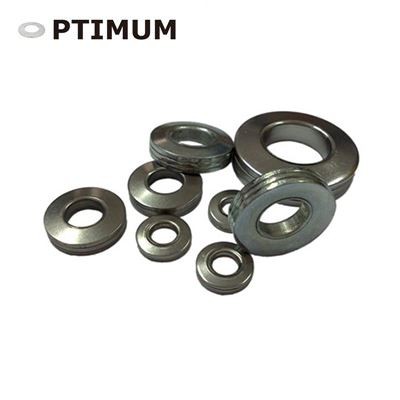
In conclusion, safety is a top priority when using ball bearing disc springs. By considering factors such as material quality, load capacity, installation, environmental factors, maintenance, training, and compliance with standards, users can ensure the safe and reliable operation of these springs.
Ball Bearing Disc Spring As a ball bearing disc spring supplier, we are committed to providing high – quality products and comprehensive support to our customers. We understand the importance of safety in every application where our springs are used. If you are in need of ball bearing disc springs for your project, we invite you to contact us to discuss your requirements. Our team of experts can help you select the right springs for your application and provide all the necessary support to ensure their safe and efficient use.
References
- Machinery’s Handbook, 31st Edition
- ASME B18.21.1 – Standard for Disc Springs
- ISO 10243:2010 – Specification for Disc Springs
Yangzhou Optimum Spring Manufacturing Co., Ltd.
As one of the most professional ball bearing disc spring manufacturers and suppliers in China, we’re featured by quality products and good service. Please rest assured to buy customized ball bearing disc spring made in China here from our factory. For more information, contact us now.
Address: No.9 West of Shuangtang Rd, Yangzhou, P.R. China 225000
E-mail: susie@optimum-spring.com
WebSite: https://www.optimum-spring.com/
