Pigment dyeing is a popular method in the textile industry due to its simplicity, versatility, and cost – effectiveness. As a dyeing auxiliaries supplier, I am often asked about the specific dyeing auxiliaries used in pigment dyeing. In this blog, I will introduce some of the key dyeing auxiliaries that play crucial roles in pigment dyeing processes. Dyeing Auxiliaries
Binders
Binders are perhaps the most important auxiliaries in pigment dyeing. They are responsible for adhering the pigment particles to the textile fibers. Pigments themselves do not have an inherent affinity for fibers, so binders are used to create a strong bond between the pigment and the fabric.
There are different types of binders available in the market. Acrylic binders are widely used because of their excellent adhesion properties, good fastness to washing and rubbing, and flexibility. They can form a thin, transparent film around the pigment particles and the fibers, which helps to keep the pigment in place. For example, in cotton fabric pigment dyeing, acrylic binders can provide a soft hand – feel while ensuring good color fastness.
Polyurethane binders are another option. They offer high elasticity and abrasion resistance, making them suitable for applications where the fabric will be subjected to mechanical stress, such as sportswear. Polyurethane binders can also improve the water – repellency of the dyed fabric to some extent.
When choosing a binder, several factors need to be considered. The type of fiber being dyed is an important factor. Different fibers have different surface properties and chemical compositions, which may require different binders for optimal adhesion. The end – use of the fabric also matters. For example, if the fabric is for high – end fashion, a binder that provides a soft and smooth hand – feel may be preferred, while for industrial fabrics, a binder with high durability and fastness is more important.
Fixatives
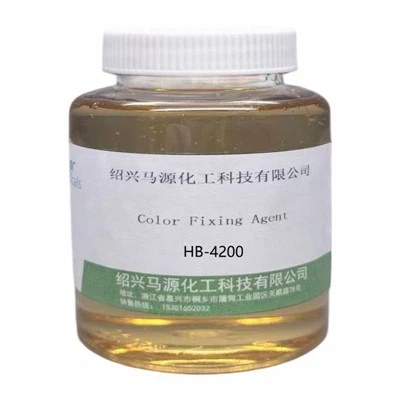
Fixatives are used to enhance the color fastness of the dyed fabric. After the pigment is applied to the fabric with the help of a binder, fixatives can further strengthen the bond between the pigment and the fiber. They work by reacting with the binder and the pigment, forming a more stable and insoluble complex.
There are two main types of fixatives: cationic fixatives and anionic fixatives. Cationic fixatives are positively charged and can interact with anionic groups on the pigment and the binder. They are effective in improving the washing fastness of the dyed fabric. Anionic fixatives, on the other hand, are negatively charged and can form complexes with cationic components in the dyeing system.
The choice of fixative depends on the type of binder and pigment used. In some cases, a combination of different fixatives may be used to achieve the best results. For example, in pigment dyeing of polyester fabrics, a cationic fixative may be used in combination with an anionic dispersant to improve both the color fastness and the dispersion of the pigment.
Dispersants
Dispersants are used to prevent the pigment particles from agglomerating and to ensure a uniform distribution of the pigment in the dyeing bath. Pigment particles tend to clump together due to their high surface energy, which can lead to uneven dyeing and poor color quality.
Dispersants work by adsorbing onto the surface of the pigment particles and creating a repulsive force between them. This keeps the particles separated and evenly dispersed in the liquid medium. There are various types of dispersants, including non – ionic, anionic, and cationic dispersants.
Non – ionic dispersants are often used because they are compatible with a wide range of pigments and binders. They are also relatively stable in different pH conditions. Anionic dispersants are effective in dispersing pigments in an alkaline environment, while cationic dispersants are more suitable for acidic dyeing baths.
When using dispersants, it is important to control the dosage. Too little dispersant may not be sufficient to prevent agglomeration, while too much can cause foaming and other problems in the dyeing process.
Wetting Agents
Wetting agents are used to improve the wetting ability of the dyeing bath on the fabric surface. They reduce the surface tension of the liquid, allowing the dyeing bath to penetrate the fabric more easily. This is especially important for fabrics with a tight weave or high hydrophobicity.
There are different types of wetting agents, such as non – ionic wetting agents and anionic wetting agents. Non – ionic wetting agents are commonly used because they are mild and have good compatibility with other auxiliaries. They can quickly spread on the fabric surface and help the dyeing bath to cover the fibers evenly.
Anionic wetting agents are more suitable for alkaline dyeing baths. They can also provide some emulsifying and dispersing effects in addition to wetting.
The choice of wetting agent depends on the type of fabric and the dyeing process. For example, in pigment dyeing of synthetic fibers, a wetting agent with good penetration ability may be required to ensure that the pigment can reach the inner layers of the fibers.
Defoamers
Foaming is a common problem in pigment dyeing processes, especially when using surfactants such as wetting agents and dispersants. Excessive foam can interfere with the dyeing process, cause uneven dyeing, and lead to difficulties in handling the dyeing bath.
Defoamers are used to control foam formation. They work by breaking the surface tension of the foam bubbles, causing them to collapse. There are different types of defoamers, including silicone – based defoamers and non – silicone defoamers.
Silicone – based defoamers are very effective in controlling foam. They can quickly spread on the foam surface and break the bubbles. However, they may have some drawbacks, such as the potential to cause oil stains on the fabric if not used properly. Non – silicone defoamers are more environmentally friendly and are suitable for applications where silicone residues are not allowed.
When using defoamers, it is important to add them at the right time and in the right amount. Adding defoamers too early may cause them to lose their effectiveness, while adding too much can lead to other problems, such as reduced dyeing efficiency.
pH Adjusters
The pH of the dyeing bath can have a significant impact on the pigment dyeing process. Different pigments, binders, and auxiliaries have different optimal pH ranges for their performance.
Acids and alkalis are commonly used as pH adjusters. For example, acetic acid can be used to lower the pH of the dyeing bath, while sodium hydroxide can be used to increase it.
Maintaining the proper pH is crucial for several reasons. It can affect the solubility of the auxiliaries, the stability of the pigment dispersion, and the reactivity of the binder. For example, in some cases, a slightly acidic pH may be required to activate the binder and ensure good adhesion of the pigment to the fabric.
Softeners
Softeners are used to improve the hand – feel of the dyed fabric. After pigment dyeing, the fabric may become stiff due to the presence of the binder and other auxiliaries. Softeners can reduce the friction between the fibers and make the fabric feel softer and more comfortable to wear.
There are different types of softeners, such as cationic softeners, anionic softeners, and non – ionic softeners. Cationic softeners are commonly used because they can provide a good softening effect and also have some antistatic properties. Anionic softeners are suitable for use in combination with anionic auxiliaries, while non – ionic softeners are more versatile and can be used in a wide range of dyeing systems.
The choice of softener depends on the type of fabric and the desired hand – feel. For example, for cotton fabrics, a softener that provides a natural and fluffy hand – feel may be preferred, while for synthetic fabrics, a softener that can improve the smoothness and luster of the fabric may be more suitable.
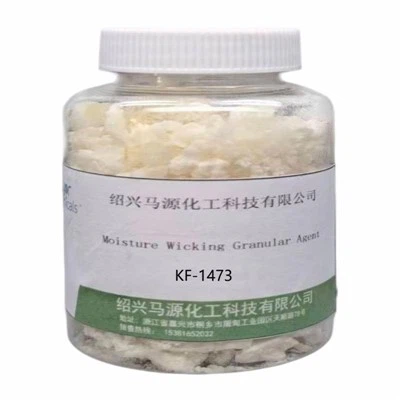
As a dyeing auxiliaries supplier, I understand the importance of providing high – quality auxiliaries for pigment dyeing. We offer a wide range of products, including binders, fixatives, dispersants, wetting agents, defoamers, pH adjusters, and softeners. Our products are carefully formulated to meet the specific needs of different textile applications.
Finishing Agent If you are involved in pigment dyeing and are looking for reliable dyeing auxiliaries, I encourage you to contact us for a detailed discussion. We can provide you with technical support, product samples, and customized solutions based on your requirements. Whether you are a small – scale textile manufacturer or a large – scale industrial producer, we are committed to helping you achieve the best results in your pigment dyeing processes.
References
- Lewis, M. (2001). The Theory of Textile Dyeing. Woodhead Publishing.
- Zollinger, H. (2003). Color Chemistry: Syntheses, Properties and Applications of Organic Dyes and Pigments. Wiley – VCH.
- Rowe, R. C., Sheskey, P. J., & Quinn, M. E. (Eds.). (2009). Handbook of Pharmaceutical Excipients. Pharmaceutical Press.
Shaoxing Mayor Chemical & Technology Co., Ltd.
We are one of the most reliable dyeing auxiliaries manufacturers and suppliers in China, specialized in providing high quality products with low price. We warmly welcome you to buy discount dyeing auxiliaries for sale here from our factory. For pricelist, contact us now.
Address: No. 78, Tianshun Road, Tudian Industrial Park, Tongxiang City, Jiaxing City, Zhejiang Province, China
E-mail: 627249875@qq.com
WebSite: https://www.mayorchemicals.com/
