Hey everyone, Spring Steel Bar
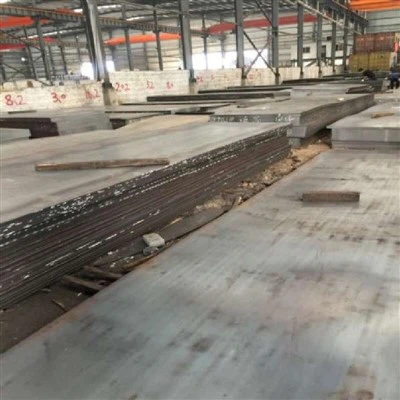
If you’ve ever worked with machinery—whether you’re a maintenance tech on a factory floor, an engineer designing parts, or even a small business owner keeping equipment running—you know spring steel bars are the unsung heroes. I’ve been supplying spring steel bars for over 10 years now, and let me tell you, I get questions every week from folks asking: “What does this stuff actually need to do to work right?” It’s not just about selling a steel bar; it’s about making sure whatever machine you’ve got doesn’t quit on you when you need it most. Today, I’m breaking down the real performance requirements these bars have to hit, straight from what I see out in the field (and the handful of times I’ve had to rush a replacement because a bar missed the mark).
First off, let’s start with the big one: fatigue resistance. You hear that term thrown around in engineering, but let’s make it real. Every time a machine runs, that spring steel bar is flexing, compressing, or stretching—all day, every day. Think of a conveyor belt spring on a packaging line; it’s opening and closing thousands of times an hour. If the bar cracks after a few months instead of a few years, that’s not just a hassle—it’s downtime that costs companies thousands. I’ve had a customer in automotive parts tell me their old steel bar would fail every 6 months on a stamping press. Once they switched to the bars we make, they hit 2 and a half years before needing a replacement. Why? Because we focus on refining the grain structure during manufacturing, so the steel doesn’t have weak spots where cracks can start. No fancy jargon, just the bar holding up to constant stress.
Next, elastic modulus (or stiffness, if we’re keeping it casual). This isn’t just about being stiff—it’s about doing exactly what it’s supposed to do, every time. If a spring steel bar for a lawn mower deck spring is too bendy, it won’t keep the deck at the right height, and you’ll be scalping your grass one week and leaving clumps the next. If it’s too rigid, it might snap under the bump of a rock. We test every batch of our bars for this—we don’t just guess based on grade. One small construction equipment client was using a generic bar for their excavator’s track tension spring; it was either too stiff (snapping mid-job on a job site) or too soft (tracks slipping). We adjusted our heat treatment process to get the exact elastic modulus they needed, and now they haven’t had an issue in over a year. It’s all about matching the bar’s stiffness to the machine’s specific load, not just grabbing whatever’s cheapest.
Tensile strength is another non-negotiable, but again, context matters. Tensile strength is how much force a bar can take before it snaps. For a small door hinge spring, you don’t need the same strength as a spring for a 10-ton hydraulic press. But here’s the thing: a lot of cheap steel bars on the market claim high tensile strength, but they’re brittle. They’ll hold a big load, but if you tap them wrong, they shatter. That’s a problem. So we balance tensile strength with toughness. Our bars go through a tempering process that makes them strong enough for heavy loads but still able to absorb a small impact without breaking. I learned this the hard way early in my career—sent a bar that was too brittle to a farm client, and it cracked when a kid drove a tractor over a fallen piece of metal. We replaced it at no cost, and tweaked our tempering formula. Lesson learned: tensile strength is useless if the bar breaks before it’s supposed to.
Corrosion resistance might not top the list for everyone, but let’s be real—most machinery isn’t kept in a climate-controlled room. If you’re in a food processing plant, the bar is getting sprayed with cleaning chemicals. If you’re in a construction job site, it’s exposed to rain, dirt, and road salt. I once had a customer in a road maintenance company call me panicking because their snowplow springs were rusting through in a single winter. The generic bars they were buying had no corrosion coating. Now, we offer a coated option for those harsh environments—plus, our base steel is formulated with a small amount of chromium that slows down rust even before coating. It’s not the most exciting part of selling bars, but when it keeps a snowplow running all season without needing a replacement, that’s what matters.
Wait, can’t forget about dimensional stability. If a spring steel bar is slightly bent when it goes into the machine, it throws off the entire setup. I’ve seen this happen with a metal stamping line—one slightly warped bar made the whole line produce misaligned parts for a full shift. We use precision straightening machines that hold our bars to within a few thousandths of an inch, so you don’t have to waste time bending them on site. A lot of smaller suppliers skip the extra straightening step to cut costs, but that ends up costing their customers way more in labor and wasted parts. For us, dimensional stability isn’t a “nice to have”—it’s a requirement.
Another angle: workability. Wait, workability? Yeah, because even if a bar is perfect, if you can’t cut it or bend it to fit the machine without it cracking, it’s useless. A good spring steel bar should be easy to machine—drill, cut, bend—without losing its strength. We adjust our manufacturing process so the steel isn’t too “grainy” (tech talk for making it hard to cut), so local machine shops can handle it without needing special tools. That’s a big deal for small businesses that don’t have access to high-end machining gear.
I know a lot of people in this space get stuck on just looking at the grade of steel—like, “it’s 5160 grade, so it must work.” But here’s the secret: two bars with the same grade can perform totally different based on how they’re made. That’s where my team and I come in. We don’t just sell a bar; we ask questions. What machine is it going in? How many cycles does it run a day? What environment is it in? Last month, we worked with a maker of medical device machinery—they needed a bar that was non-magnetic, for a sensor component. Most spring steel is magnetic, but we tweaked the alloy to add a tiny bit of nickel, so it’s still strong but doesn’t interfere with their sensors. That’s the kind of custom adjustment that makes our bars stand out.

At the end of the day, all these performance requirements boil down to one thing: reliability. You don’t want your machine to be the one that causes a production delay, or a farm job to get rained out because a spring broke. I’ve built my business on knowing that every bar we ship has to earn its spot in that machine. If you’re working on a project and need spring steel bars that hit all these marks, I’m here to help. We can talk through your specific needs, send you samples, and get you exactly what you need without the hassle of dealing with a big, faceless supplier. Just reach out to start the conversation.
Stainless Steel References
- ASTM A229 Standard Specification for Steel Wire, Music Spring Quality
- NPTEL Lecture Series on Mechanical Engineering: Fatigue in Metallic Materials
- Machinery’s Handbook, 31st Edition: Spring Materials and Performance Requirements
Jiangsu Cunrui Metal Products Co., Ltd.
As one of the most experienced spring steel bar manufacturers in China, we also support customized service. Please rest assured to buy cheap spring steel bar for sale here from our factory. If you have any enquiry about pricelist and free sample, please feel free to email us.
Address: 32-117,119, Nanfang Stalnless Steel Trading Conter, Wuxi,Jiangsu, China
E-mail: karen@cunruimetal.com
WebSite: https://www.cunruimetals.com/
