If you’ve ever stared up at a commercial jet gliding silently through a cloud layer, or watched a military helicopter hover steady above a training range, you’re not just seeing metal and fuel at work. Every part of that aircraft—from the tiny sensor pin that calibrates a cockpit’s navigation system to the landing gear hinge that bears 60 tons of touchdown force—depends on components that don’t just fit. They perform. For 12 years, I’ve run a precision custom components supply business that works exclusively with aerospace, defense, and satellite manufacturers, and one question comes up at least once a week: Can what we do be used in aerospace applications? The short answer is yes. The long answer is why, and how that answer has changed as the aerospace industry demands parts that fit within microns, resist temperatures that swing from -450°F to 1,800°F, and outlast the aircraft they’re installed in. Precision Custom Components
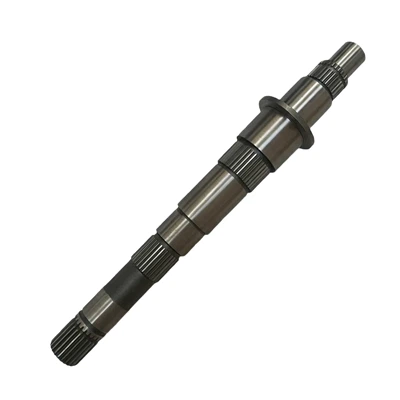
Aerospace is a unique industry. Unlike consumer electronics, where a slightly misfitting part might make a phone a little slower, or a misaligned button hard to press, a wrong part or a small manufacturing gap in aerospace can kill people. Consider a commercial airliner’s engine turbine blade: it spins 10,000 times a minute at takeoff. If the blade’s edge is even 0.002 inches off its designed angle, the aerodynamic lift drops; over 10 flights, that adds up to 5% more fuel burn, and over a year, that’s 100 extra tons of carbon released, plus thousands of dollars in operating costs. On top of that, the blade is surrounded by exhaust that reaches 2,500°F—hot enough to melt steel—and subject to constant vibration that would crack a standard metal part in a month. That’s the space where precision custom components live. Off-the-shelf parts can’t account for the quirks of a specific aircraft model, the unique operating conditions a customer’s mission requires, or the strict regulatory frameworks that govern aerospace parts. Precision custom parts are designed, machined, and finished to exact, repeatable tolerances, tailored to the customer’s specific use case, and tested to meet or exceed industry safety standards.
Let’s break down where these parts show up on a modern aircraft. The cockpit is a good starting point. A single cockpit might have 50+ custom precision components, many of which are not visible to passengers. There are the potentiometers that adjust the autopilot’s heading, tiny pins that lock navigation displays in place, and the gears that move the radar antenna. For private jets, where manufacturers build 10-20 units a month rather than the 500+ of a commercial Boeing 737, off-the-shelf cockpit parts are often too bulky or don’t meet the specific ergonomic needs of the pilot. For example, a client that builds business jets last year came to us with a problem: their new side-stick controller kept slipping during turbulence, because the standard bearing they’d used had a tolerance gap that allowed 0.005 inches of movement—enough for a pilot to lose small altitude control mid-turbulence. We machined a custom stainless steel bearing with a 0.0008 inch tolerance, polished to a mirror finish to reduce friction, and tested it under 10 hours of continuous vibration equivalent to five years of flight. Within six weeks, the pilot feedback shifted from “the stick feels unsteady” to “it’s like an extension of my arm.” That’s precision custom components working.
Moving to the fuselage, the parts change but the stakes stay high. There are the fasteners that hold the composite panels together, the brackets that mount wing sensors, and the pressure relief valves that make sure the cabin doesn’t rupture at 35,000 feet. Composite materials are now standard in aerospace, because they’re lighter than metal and stronger for their weight—but they’re also delicate. A standard steel fastener can scratch a composite panel during installation, creating a tiny crack that grows into a structural flaw after 100 flights. We worked with a regional airline repair facility last year to develop a custom titanium fastener with a rounded, bead-blasted head that matched the composite’s surface texture, eliminating the scratch risk. We also added a micro-thin coating that prevents galvanic corrosion between titanium and the carbon fiber composite. That part has cut their fuselage repair costs by 30% per aircraft, and reduced the time they spend on pre-flight inspections. For defense aircraft, where stealth technology depends on the smooth, unbroken surface of the fuselage, custom precision shims are used to fill gaps between panels less than 0.001 inches. Any gap larger than that will cause radar waves to reflect, breaking the aircraft’s stealth profile—something that could mean the difference between a mission succeeding or a pilot being shot down.
The engine is where precision custom components matter most. This is the heart of the aircraft, and it’s also the most demanding operating environment. A commercial jet engine has over 25,000 parts, many of which are custom, and all of which need to work in extreme conditions. Turbine blades, combustion chambers, and seal rings are all precision custom components. We work with a manufacturer of high-bypass turbofan engines to produce custom seal rings that fit between the turbine stages. These seals are exposed to 1,800°F exhaust, and need to expand and contract with the engine as it heats up and cools down, without leaking fuel or air. Off-the-shelf seals are made to a one-size-fits-all diameter, but each engine has tiny, unique variations in its turbine housing that come from machining and assembly. Our custom seals are machined to match each individual engine’s housing, within a 0.0005 inch tolerance. That has reduced engine fuel burn by an average of 2.5% for their customers—over the lifetime of a single aircraft, that’s $2 million in fuel savings. For military engines, which often operate at higher temperatures and with more rapid acceleration than commercial engines, custom components that can withstand thermal shock are critical. We’ve worked on components made from Inconel, a high-temperature alloy, that can go from room temperature to 1,500°F in 60 seconds, without cracking or losing shape. Standard Inconel parts would develop micro-cracks after a few dozen thermal cycles, while our custom parts last thousands of cycles, cutting maintenance time and cost for military fleets.
Satellite components are another area where precision custom components are indispensable. Satellites are launched into space, where temperatures swing from -450°F in Earth’s shadow to 2,500°F when facing the sun, and there’s no way to repair them once they’re in orbit. Every part of a satellite—from the solar panel hinges that unfold in space to the communication antenna brackets to the tiny circuit board pins—must be custom, because off-the-shelf parts can’t survive the space environment. For example, a customer building a low-Earth orbit constellation last year came to us with a problem: their solar panel hinges were failing after six months in orbit, because the off-the-shelf steel hinges they used developed corrosion from atomic oxygen, a thin layer of gas that erodes metal in space. We machined a custom hinge from a titanium alloy with a thin, durable ceramic coating, and tested it in a space simulation chamber that replicated atomic oxygen, temperature swings, and zero gravity. The hinges have now been in orbit for 18 months, with no signs of wear, and the customer has ordered 2,000 more for their next satellite batch. Satellite components also have strict size limits. A satellite’s total weight is measured in kilograms, and every gram saved reduces launch cost. Our custom precision components are designed to be as small and light as possible, without sacrificing strength. For example, a custom bracket that mounts a star tracker (a device that helps satellites navigate by mapping star positions) is 40% lighter than the standard bracket the customer used, and more rigid, so the star tracker doesn’t jitter and lose navigation accuracy.
Now, let’s address a common concern I hear: is precision custom components for aerospace only for big programs, or can small, specialized suppliers like us keep up with demand? The answer is yes, but only if you have the right processes in place. Aerospace has some of the strictest quality standards in any industry: AS9100, the global quality management system for aerospace, requires that every part has a traceable history, from raw material to finished product. We have a full in-house quality team that tracks every part we make, with serial numbers for every material batch, every machining run, and every inspection. All our operators are trained specifically for aerospace work, with ongoing training on new materials and regulatory updates. We also work with independent third-party testing facilities to verify every part meets the required standards, so our customers don’t have to take our word for it. Unlike large aerospace manufacturers that have long lead times, we specialize in short runs: parts for 1 or 2 aircraft, prototype parts for new programs, or replacement parts for older models that are no longer in production with the original supplier. That flexibility is something many small aerospace customers value, whether they’re a small satellite startup building their first constellation or a regional airline maintaining a 20-year-old fleet.
I’ve been in this business long enough to see how much the aerospace industry has changed in the last decade. Electric aircraft, urban air mobility (UAM) vehicles, and reusable rockets are all becoming more common, and they all depend on precision custom components. UAM vehicles, the small electric planes that are supposed to operate in city centers, have much lower operating costs than commercial jets, so their parts need to be lighter, cheaper, and more reliable. A UAM vehicle’s battery mount, for example, is a custom component that needs to hold a 500-pound battery steady during takeoff, landing, and turbulence, while also being light enough to not add unnecessary weight to the aircraft. We’ve developed custom aluminum alloy mounts for UAM manufacturers that are 30% lighter than standard steel mounts, and tested to withstand 10,000 takeoff and landing cycles—more than the average UAM vehicle will need in 10 years of operation. Reusable rockets, which companies like SpaceX and Blue Origin are developing, also depend on custom precision components. The rocket’s engine nozzle, which has to withstand thousands of degrees of heat and multiple flights, is a custom 3D-printed component machined to tight tolerances. While we don’t make rocket nozzles, we’ve worked with companies that make smaller components for reusable rockets, like the valves that control fuel flow, that need to be precise enough to handle the rapid pressure changes of launch and landing.
At the end of the day, aerospace is about pushing limits. We want aircraft that are safer, more fuel-efficient, more reliable, and more accessible. None of that is possible without parts that are made to the exacting standards required for flight. Off-the-shelf parts have their place—for things like office supplies or car parts where slight tolerances don’t have life-or-death consequences—but in aerospace, custom precision is non-negotiable. I’ve seen parts we made save a pilot’s life, cut a customer’s operating costs by millions, and help a satellite stay in orbit for years longer than expected. That’s why I’ve spent the last 12 years focused on this work.
If you’re an aerospace manufacturer, defense contractor, satellite developer, or airline maintenance provider, and you have a component that’s not working, or a mission that requires a part that doesn’t exist off the shelf, let’s talk. We have the experience, the equipment, and the quality processes to deliver parts that meet your exact needs, on time, and to the strictest aerospace standards. No part is too small or too specialized for us to handle. Reach out today to start your procurement discussion.
Power Equipment Parts References
- AS9100 Rev D: Quality Management Systems – Requirements for Aerospace, 2016
- Boeing Commercial Airplanes: 2023 Commercial Market Outlook, 2023
- NASA Space Environmental Effects Handbook, 2022
- Society of Automotive Engineers (SAE): Aerospace Materials and Processing Standards, 2021
- Global Commercial Satellite Demand Report, 2023, Euroconsult
Hubei Kangding Machinery Equipment Co., Ltd.
We’re well-known as one of the leading precision custom components manufacturers and suppliers in China, specialized in providing high quality customized products. Please feel free to buy advanced precision custom components for sale here from our factory. For pricelist, contact us now.
Address: Qianchang Industrial Park, Jingshan County, Jingmen City, Hubei Province
E-mail: 339248585@qq.com
WebSite: https://www.cnkangding.com/
