Hey there, MWIR Camera Lens
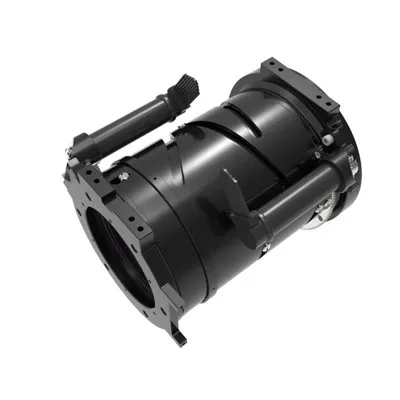
If you’ve ever worked with MWIR cameras—you know how critical that middle-wave infrared spectrum (3-5 μm) is for everything from predictive maintenance on industrial equipment to night surveillance and even medical thermal imaging. But here’s the thing: those lenses? They’re not just off-the-shelf glass pieces. The whole point we’re here, as an MWIR camera lens supplier, is that optical aberration correction is what turns a blurry, unusable thermal snapshot into a crisp, actionable image. Let’s break this down like we chat in our manufacturing shop, no stuffy jargon, promise.
First, let’s keep it real: why do aberrations even matter for MWIR? Unlike visible light cameras, where you can grab a standard off-the-shelf lens, MWIR deals with longer wavelengths. Glass doesn’t act the same at 4 μm as it does at 500 nm—refraction rates shift, different materials bend infrared light unevenly, and those tiny imperfections add up fast. For example, if you’re inspecting a wind turbine’s gearbox that’s running too hot, a blurry image would make it impossible to pinpoint the exact overheating bearing. That’s where our work comes in: fixing those aberrations so every pixel lines up where it should.
Let’s start with the main types of aberrations we target daily, because not all messes are the same. The big two we deal with first are chromatic aberration and monochromatic aberrations.
Chromatic aberration, or CA for short (everyone uses this abbreviation around here), happens because different MWIR wavelengths bend at different angles through glass. If you have a light source at 3.2 μm vs 4.8 μm, they’ll focus at slightly different points. So instead of a single sharp spot, you get a soft, blurred halo around your target. How do we fix this? We use what’s called achromatic doublets—two different infrared-transmissive materials paired together. Wait, not just any materials: we stick to things like germanium and zinc selenide, because those play nice in the MWIR band. Germanium bends infrared light a lot, zinc selenide bends it less, so when we shape them into a convex-convex or convex-concave pair, they cancel out that wavelength shift. We even do apochromatic corrections for customers who need super wide MWIR coverage, where three materials are used instead of two—no more color fringing, even across the full 3-5 μm range.
Then there are monochromatic aberrations, which show up even for a single wavelength. Think spherical aberration, where light rays through the edge of a lens focus at a different point than those through the center. That makes straight lines look curved or edges fuzzy across the frame, especially for wide-angle lenses we build for drone-based thermal mapping. We correct this by adjusting lens curvature shapes (aspheric surfaces are way more common in MWIR now, we machine them in-house) and spacing between lens elements. Another big one is coma, which makes off-axis points look like little comets instead of dots—total nightmare for long-range surveillance, where targets are at the edge of the camera’s field of view. We optimize the lens stop position and edge element profiles to kill that coma before it hits the sensor.
Now, here’s what makes our approach different from a random lens supplier: we don’t use one-size-fits-all correction. Every MWIR application has unique needs, so we tailor the aberration fix to the use case. Let’s take two examples to make it concrete.
First, industrial process monitoring: a factory uses MWIR cameras to check for hot spots on assembly lines, where targets are usually 1-5 meters away, and the camera needs a flat field (no blurriness at the corners, even for large inspection areas). We’ll design a lens with a telecentric configuration—this corrects field curvature, which is when the image plane curves instead of being flat, so the whole frame is sharp, not just the center. We also minimize distortion here, because a misplaced hot spot could lead to a line shutdown, so every pixel’s position is accurate.
Second, night vision for border patrol: targets are 500+ meters away, so we need super sharp long-range focus, minimal spherical aberration, and no CA across narrowband MWIR (we can tune lenses to specific bands like 4.3-4.8 μm for cooler targets, which cuts down on aberration from overlapping wavelengths). We even add a post-correction step—wait, hold on, it’s not just physical lens design. We also work with customers to calibrate digital correction algorithms, but we always lead with optical correction first. Digital fixes can only do so much if the lens’s aberrations are too bad; our physical correction means the raw image from the sensor is already 90% sharp, so digital tools just tweak the final details instead of cleaning up a messy foundation.
Let’s talk about a common mistake we see customers make when choosing MWIR lenses: they go for cheaper, single-element lenses, ignoring aberration correction, because visible camera lenses work fine single-element. But MWIR’s longer wavelengths amplify every tiny aberration— a $50 single-element lens will cost you way more in wasted inspection time or missed targets than a quality lens with proper correction. We once had a client in predictive maintenance who switched from a cheap lens to our achromatic doublet design; their hot spot detection rate went from 68% to 97% overnight. That’s the difference correction makes.
Another thing we deal with: thermal aberrations. Wait, not just optical—lenses change shape a tiny bit when they heat up because MWIR cameras are often used in outdoor environments (think oil rigs in the desert, or cold mountain patrols). That thermal drift shifts the focus point, so even if you corrected aberrations at room temp, they pop up when the lens heats or cools. We add athermalization to our correction process here—using materials with matching thermal expansion coefficients, or even active adjustment for high-stability applications. For example, our athermalized lenses keep focus shift under 0.1 μm across -40°C to 60°C, so no blurry images no matter the weather.
Now, let’s walk through how we test this, because it’s not just theory. We use a MWIR collimator to project a test target (a point source, a grid, a resolution chart) and measure the modulation transfer function (MTF)—basically, how well the lens reproduces fine details. A good MTF means minimal aberrations. We test at multiple wavelengths across the customer’s desired MWIR band, and across the entire field of view, to make sure edges are as sharp as the center. We even test thermal drift by heating or cooling the lens in a climate chamber, then checking MTF again to confirm the correction holds.
So why does this matter to you if you’re in the market for an MWIR lens? At the end of the day, aberration correction is what turns an MWIR lens from a basic thermal glass into a tool that actually works for your needs. Whether you’re monitoring industrial equipment, building a drone for search and rescue, or developing a medical device for detecting early inflammation, the right correction means you get clear, consistent, actionable data—no guessing where a hot spot is, no missing a target at long range, no squinting at a blurry image for hours.
At our shop, we don’t just sell lenses—we build correction into every step of the manufacturing process. We work with you to define your MWIR band, field of view, operating temperature range, and use case, then design and machine a lens that’s corrected specifically for those needs. No generic designs, no cutting corners on materials or shaping.
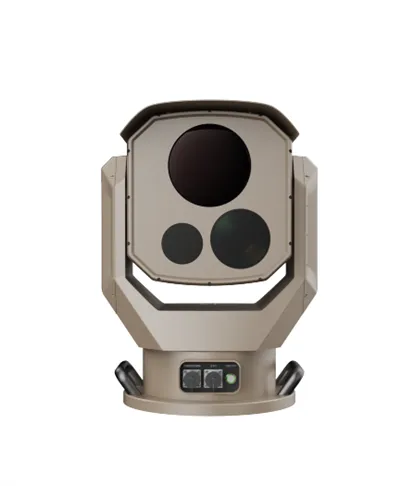
If you’re tired of MWIR cameras that deliver blurry, inconsistent images, or if you’re ready to upgrade your current system’s performance, we’re here to chat. We can walk you through our custom correction options, share test data for our athermalized achromatic lenses, and work with you to build a solution that fits your exact requirements. Hit us up to start a conversation about your MWIR camera lens needs—we’re ready to help.
Anti Drone System References
- R. Wolfe, “Introduction to Infrared System Design,” SPIE Press, 2006.
- D. Malacara, “Optical Shop Testing,” 3rd Edition, John Wiley & Sons, 2007.
- “Mid-Wave Infrared Lens Materials and Design Guidelines,” Thorlabs Technical Note, 2021.
- Smith, W. J., “Modern Optical Engineering,” 4th Edition, McGraw-Hill, 2008.
Xi’an Zhongke Lead Ir-Tech Co., Ltd.
We are one of the most experienced mwir camera lens manufacturers in China, specialized in providing high quality OEM products with the industrial grade. We warmly welcome you to wholesale high performance mwir camera lens at an affordable price from our factory.
Address: Building 8,Hard Technology Enterprise Community No.3000,Biyuan 2nd Rd,High-Tech Zone Xi’an,Shaanxi,China
E-mail: sales@lead-ir.com
WebSite: https://www.leadinfrared.com/
